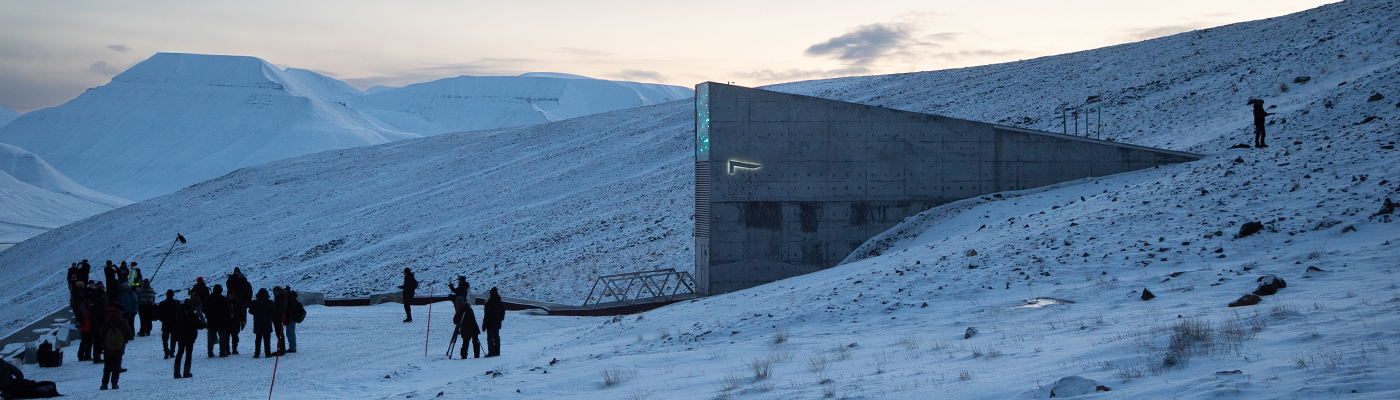
SVALBARD GLOBAL SEED VAULT
Top photo: Seed deposit event, October, 2025.
Svalbard Global Seed Vault is a backup facility for the world’s crop diversity. By putting seed duplicates for long-term and safe storage in Svalbard, genebanks reduce the risk of losing invaluable genetic material if anything should happen to their original collections. NordGen is responsible for operating the Svalbard Global Seed Vault in cooperation with the Norwegian Ministry of Agriculture and Food and the international organization Global Crop Diversity Trust. NordGen’s role in the Seed Vault partnership is to communicate with genebanks, handle seed deposits and update the Seed Portal – a publicly accessible database gathering information about the seeds stored in the Seed Vault.
Seed Vault openings: 3 (February, June and October) | Depositing institutions in total (31/12 2025): 131 | Number of seed samples in the Vault (31/12 2025): 1,378,238 |
New seed samples duplicates: 46,781 | New institutions signing the deposit agreement: 7 | Number of depositing institutions during 2024: 47 |
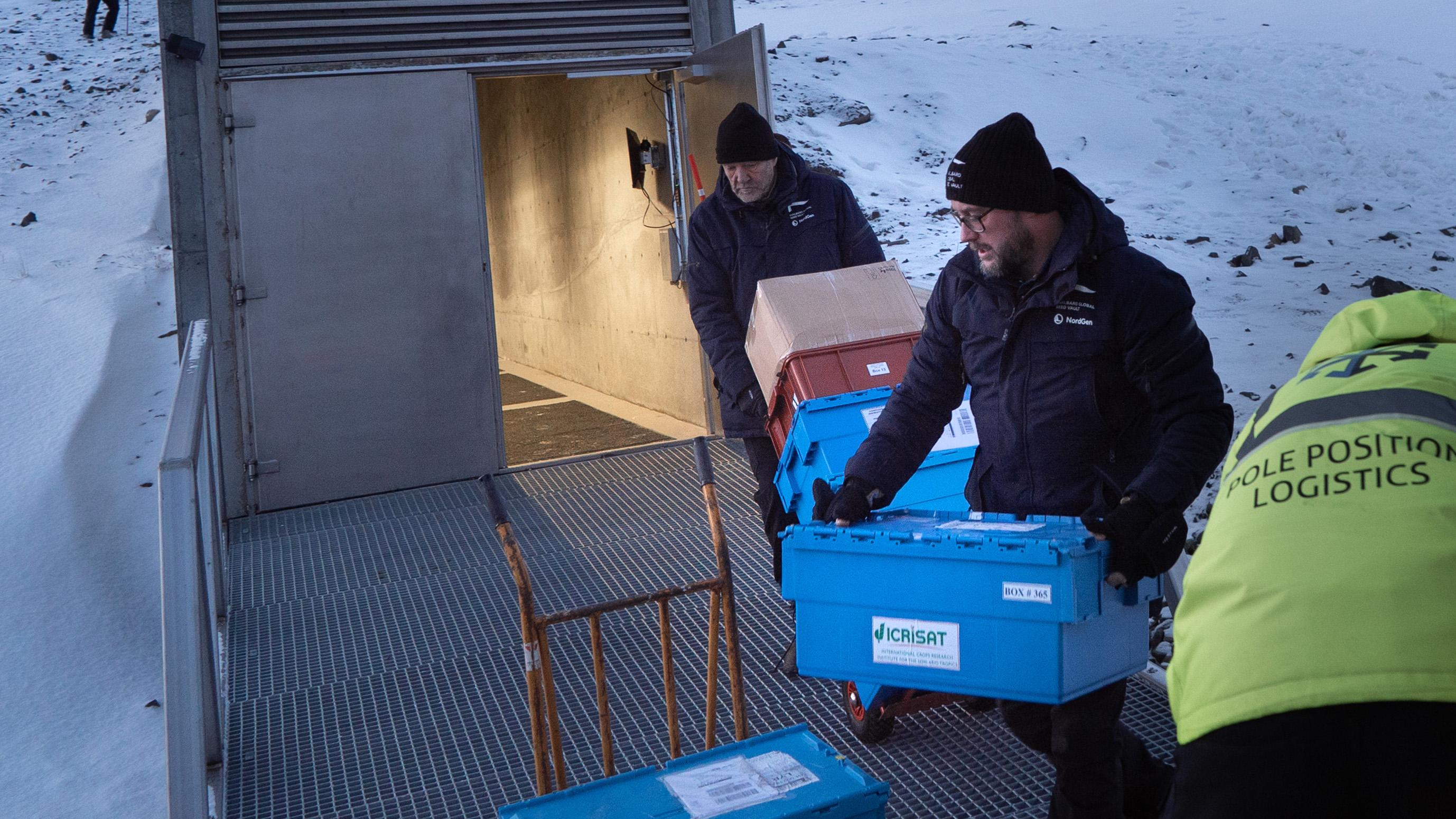
NordGen staff with seed boxes during the seed deposit event in October.
Key activities
New depositors
Ten genebanks either signed the Deposit agreement in 2025 and/or deposited their first seeds in 2025.1
More than 46,000 safety duplicates
In total 46,781 safety duplicates from 47 depositors were added to the Seed Vault collection in 2025. By the end of the year, the total holding of seed accessions in the Seed Vault was 1,378,238 samples deposited by 131 genebanks/institutes. In total, 167 seed boxes were taken into the Seed Vault by NordGen's staff in 2025.
100-year seed experiment established
To improve the knowledge on seed longevity, an experiment comprising seeds of globally important crops is underway in the Svalbard Global Seed Vault – a project that is planned to last for 100 years. The last seed samples belonging to the 100-year seed germination experiment in the Seed Vault were deployed in 2025 and the establishment of the project is thereby completed.
Nanofilm securing information
The nanofilm project increases the security and integrity of conserved seed sample data by printing box wise data on nanofilm and attaching film stripes to all seed boxes in the Seed Vault. Film stripes/labels to 470 boxes deposited in 2022 and 2023 have been attached to the corresponding boxes during 2025. Printing labels for another 210 boxes deposited in 2024 have been printed in 2025, for being attached during 2026. For future years, nano film labels will be produced and attached to boxes once a year, as a yearly routine included in the Seed Vault annual workplans and core budgets.
1New Depositors in 2025:
1. International Center for Biosaline Agriculture, United Arab Emirates
2. Malawi Plant Genetic Resources Centre, Malawi
3. Obafemi Awolowo University, Nigeria
4. Scientific Research Center of Agriculture, Georgia
5. Can Tho University, Vietnam
6. Malaysian Agricultural Research and Development Institute, Malaysia
7. Sveaskogs förvaltning AB, Sweden
8.Instituto Nacional de Innovación Agraria, Peru
9. Philippine Rice Research Institute, Philippines
10. Instituto de Ciencia y Tecnologia Agricolas, Guatemala
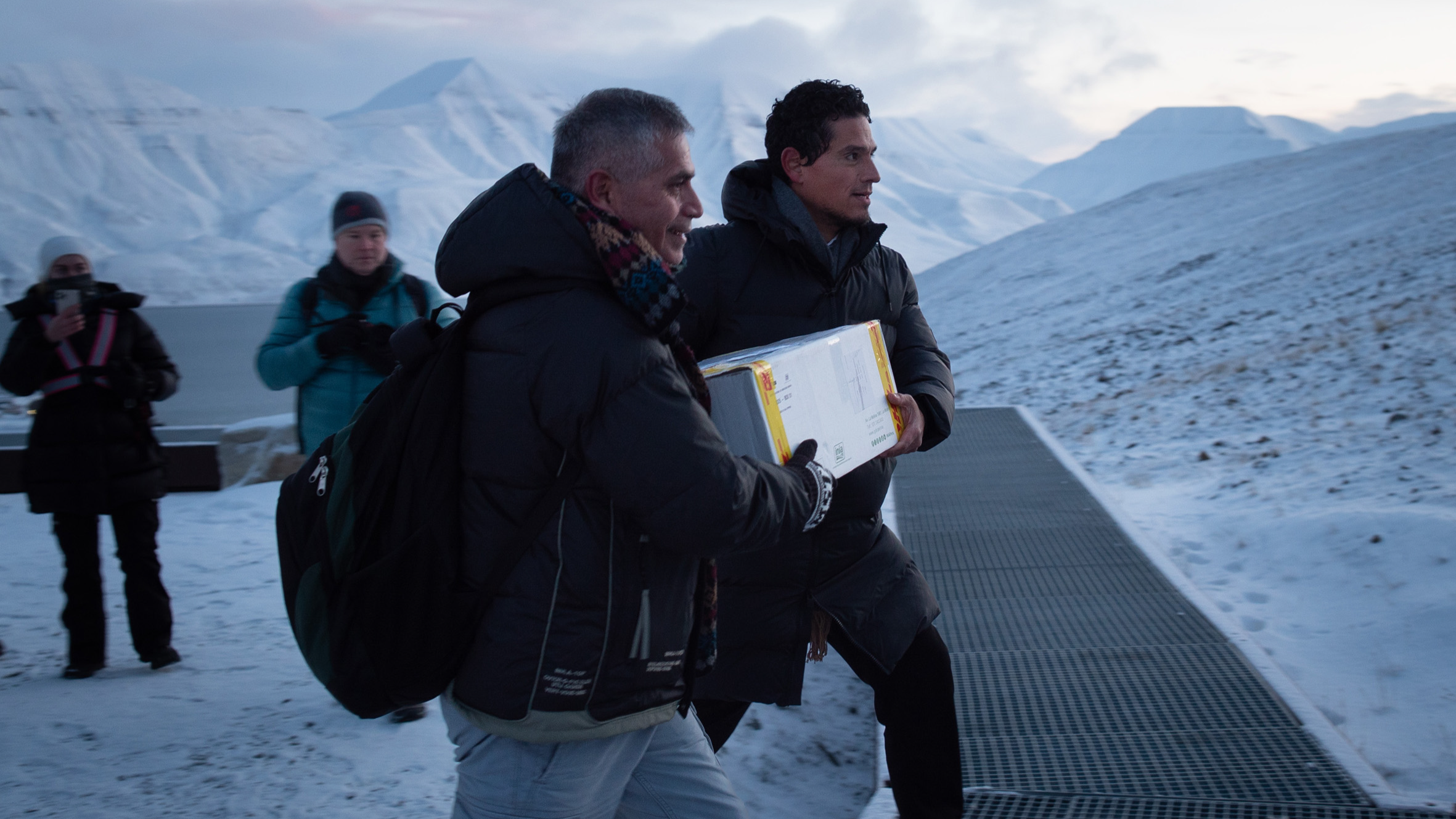
Representatives from Peru with the box from Instituto Nacional de Innovación Agraria.
The Seed Vault was established in 2008 and is owned by Norway. NordGen is responsible for managing the Seed Vault in partnership with the Norwegian Ministry of Agriculture and Food and the international organization Crop Trust. The iconic building, safeguards security copies of seeds stored in genebanks and thereby contributes to securing the world’s food supply.
The location of the Seed Vault was chosen due to Svalbard being a remote, cold and safe place, yet easily accessible for shipping and handling. In addition, the Nordic Genebank (now NordGen) stored a backup of the Nordic seed collection here already from 1984, something that inspired to the establishment of the Svalbard Global Seed Vault. The seed chambers of the Seed Vault are carved out from the solid rock of the Plateau mountain. They offer a frozen environment where artificial cooling keeps the temperature at a constant –18°C and according to FAO’s genebank standards. The ownership of the seeds stored in the Seed Vault remains with the depositing genebank, and only the institution that deposited the seeds are allowed to withdraw them.