Knowledge centre – NordGen Forest
Nordic forests provide wood and bioenergy, protection against wind and erosion, biodiversity and is a carbon dioxide sink. The trees planted today will grow for decades to come but climate change can hit our forests hard, and we must deal with the emergence of new pests and diseases that haven’t existed in the Nordic region before. Within the forest industry there is a need for strong, resilient forests in the future and an important key to this resilience is genetic diversity. Since different trees carry different genes, chances are that some of them can resist the new threats. For example, the ash dieback disease is today threatening the Nordic ashes. But by identifying particular trees that carry resistance genes, the species could be saved. NordGen Forest is working to exchange knowledge about these kind of issues in the Nordic forest community.
Key activities
For NordGen Forest, the year 2025 was again a year filled with fruitful meetings on site in several Nordic countries. For example, a successful forest conference was arranged in Hella, Iceland.
Thematic days and forest conference
The first NordGen Forest event in 2025 was a thematic day organized on 13 January in Denmark on the theme 250.000 hectares of new forest in Denmark: Vision, implementation and genetics. The speakers included Erik Dahl Kjær, Professor, at the University of Copenhagen (Department of Geosciences and Natural Resource Management) and Mogens Krog, Specialist Consultant at the Ministry for Green Transition (Styrelsen for Grøn Arealomlægning og Vandmiljø). 74 persons attended the event online.
The annual NordGen Forest conference was arranged on 17-18 September 2025 in Hella, Iceland. About 70 persons participated in the conference that was entitled NordGen Forest Conference 2025 – Birch at the heart of reforestation. During the first day, 15 speakers gave presentations covering several interesting topics on aspects of forestry and forest genetic resources within birch. The conference venue also hosted a poster exhibition where young researchers had the opportunity to present their findings. On the second day, the participant had a full day of excursions. At Nauthúsagil, the group was able to admire a rowan tree that is at least 150 years old and the ancestor of Iceland's planted rowans. The trip then continued via dramatic river crossings to the beautiful surroundings of the Þórsmörk nature reserve, where the group observed the natural regeneration and expansion of birch forests.
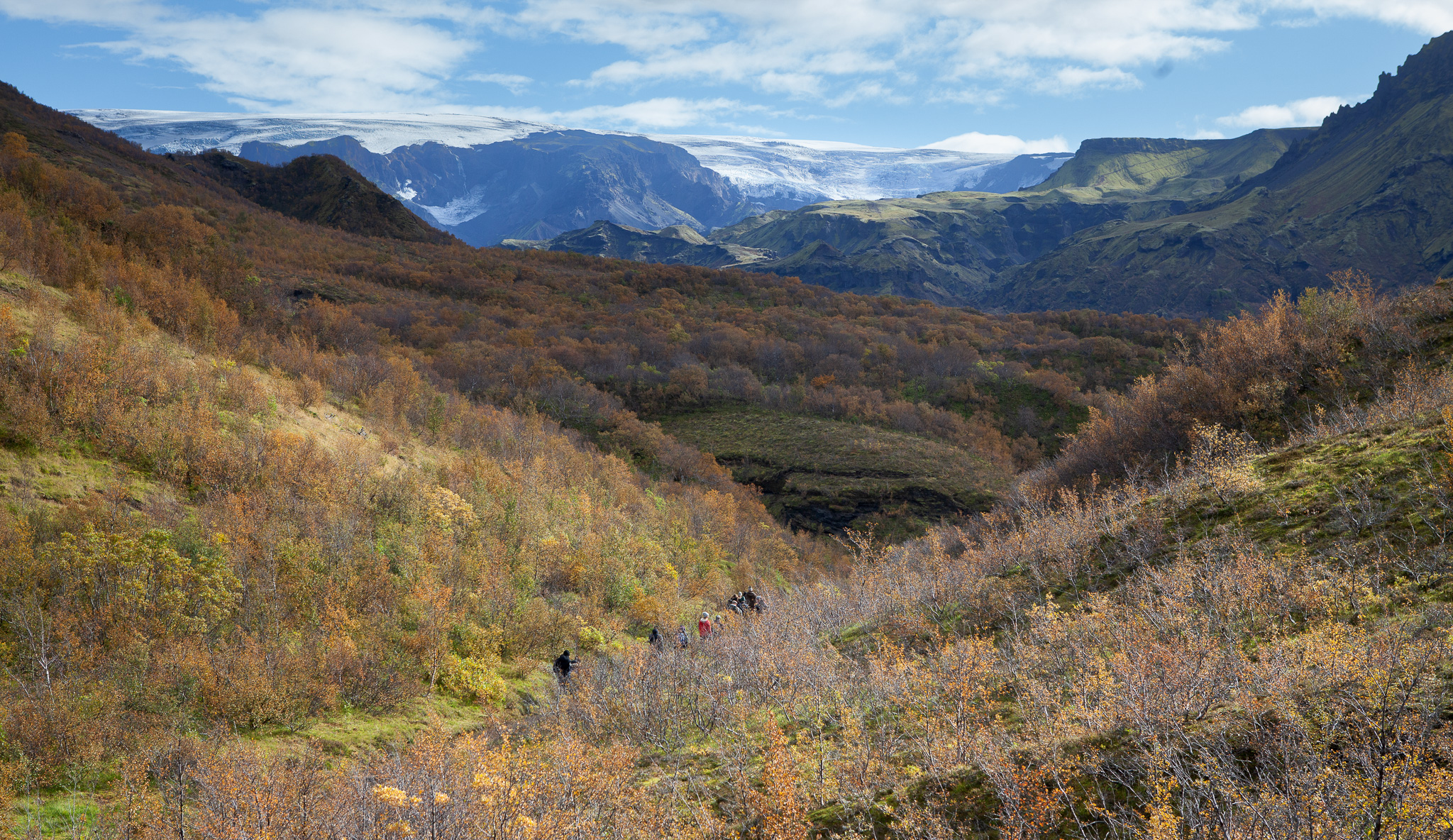
Scenery from the Icelandic Þórsmörk nature reserve during an excurision at the NordGen Forest Conference 2025.
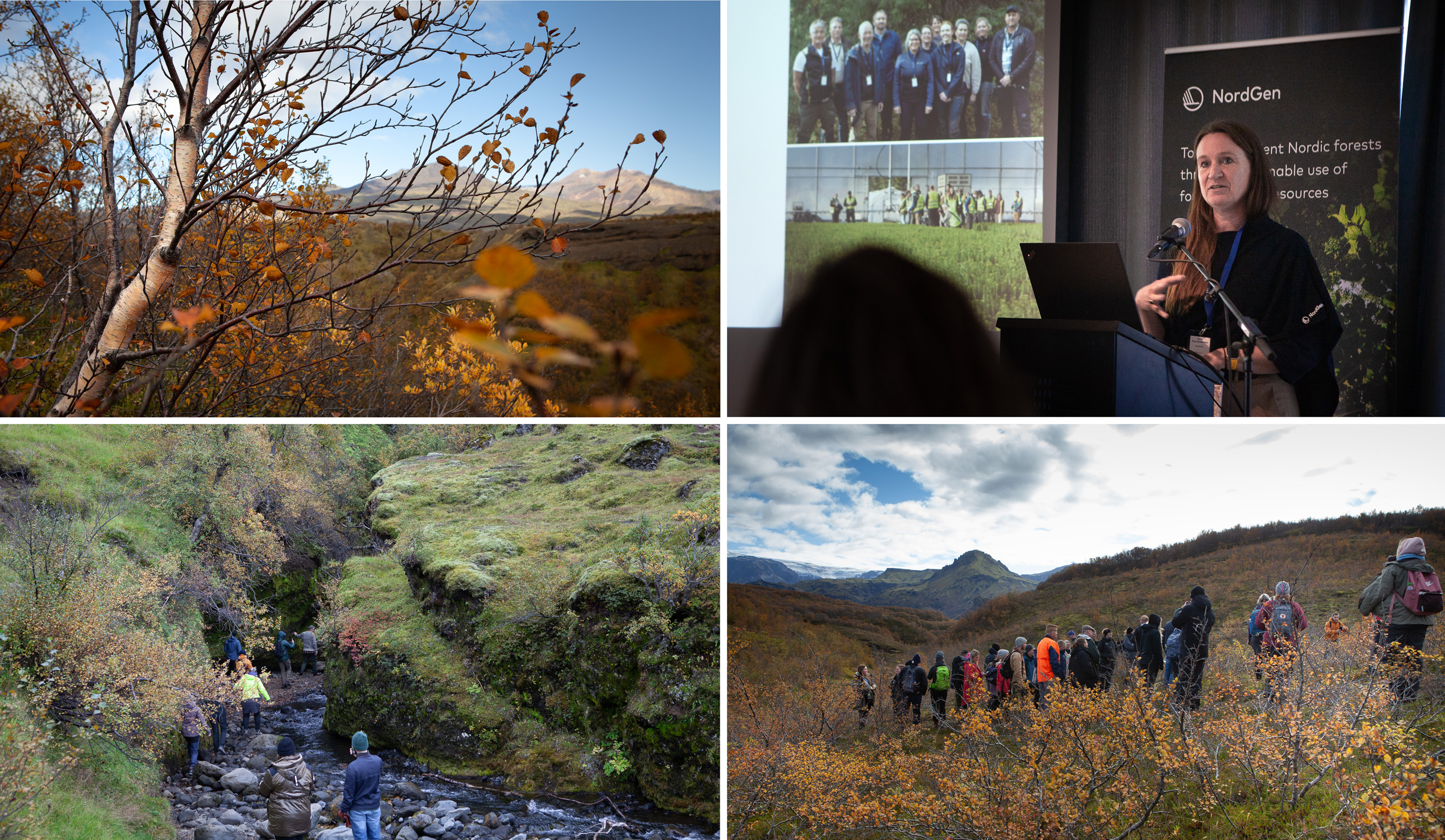
The photos from the conference show the excursion to Nauthúsagil, NordGen's Executive Director, Lene Krøl Andersen and the excursion in Þórsmörk nature reserve.
The second thematic day of the year was arranged in Hudiksvall, Sweden, on 26 and 27 August. The event that was entitled Towards the future production of forest seedlings, included nine presentations and en excursion to Holmen Skog's forest nursery. Around 40 persons attended the thematic day that was followed by a meeting arranged by SLU Skogsplantforum.
Updated statistics report
In 2025, the third edition of the biennial statistics report on forest seed and plant material in the Nordic countries was published. The first edition was released in 2021 and the second in 2023. The 2025 edition has been expanded to include more statistics and more species than the previous reports, as well as including more recent data from the years 2022 and 2023. The report compiles statistics and reports contributed by representatives of each country in the NordGen Forest Regeneration Council.
Scholarships
A total of 24 applications (13 from Sweden, 6 from Finland, 1 from Denmark, 2 from Norway and 2 from countries outside the Nordic region) were received by the deadline on 15 February 2025. 12 of them were granted (10 from Sweden and 2 from Finland). The scholarship holders shared a total of NOK 100,000, which was used to cover travel and fieldwork expenses, thereby supporting activities in several Nordic countries.
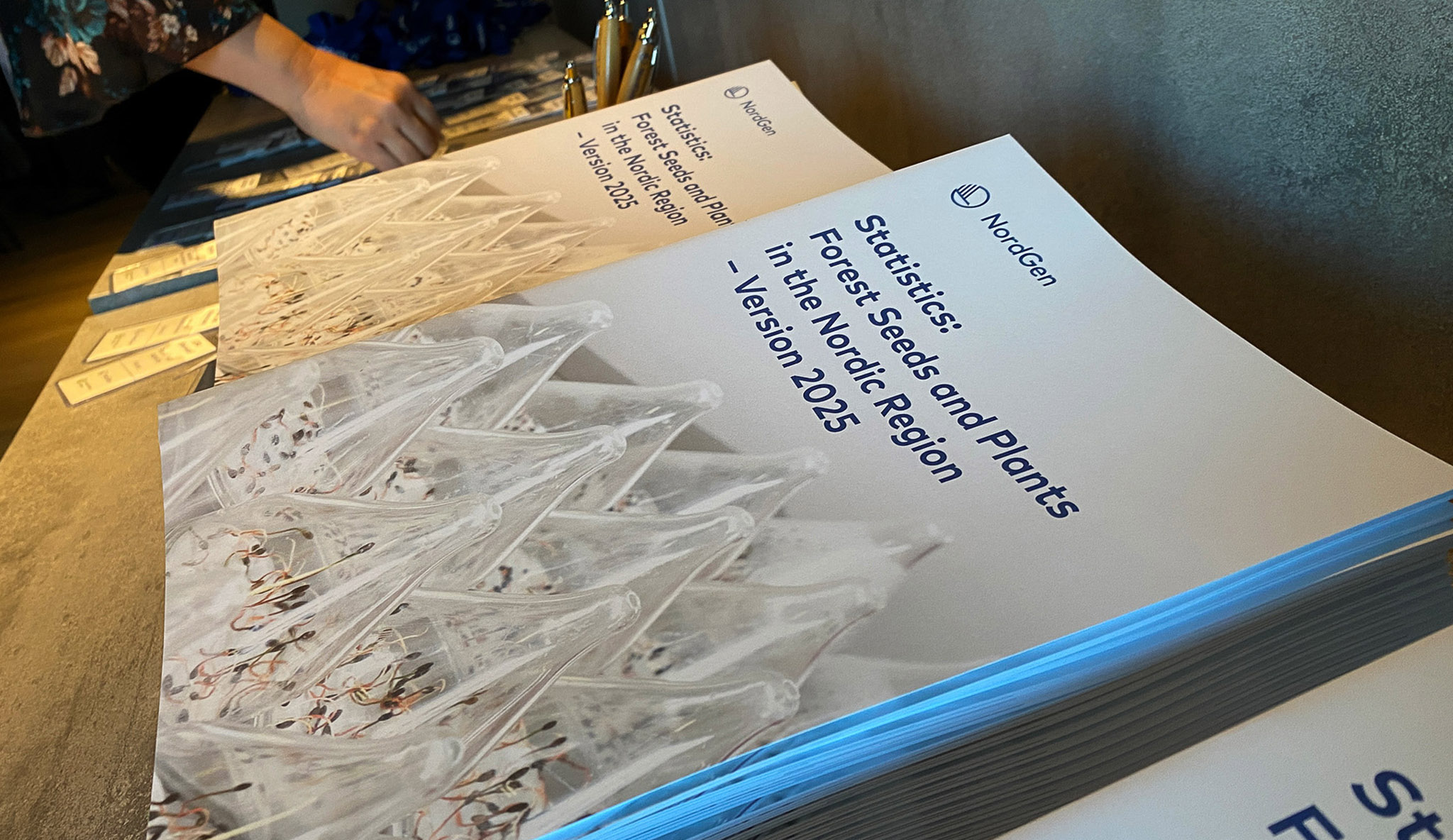
The recent report, Statistics: Forerst Seeds and Plants in the Nordic Region – Version 2025.
NordGen Forest addresses conservation and sustainable use of forest genetic resources, by being a forum for researchers, practitioners and managers working on forest genetic resources, seeds, planting stock and regeneration. We facilitate flow of scientific information and knowhow between these groups.
NordGen Forest consists of two bodies: The NordGen Forest Regeneration Council, which meets twice a year and organize our conferences and thematic days, and the NordGen Forest Working Group on Genetic Resources, which meets once a year. In cooperation with Nordic Forest Research (SNS), NordGen Forest also grants scholarships to enhance knowledge and competences in the area of seed, plants and forest regeneration.
NordGen Forest is focusing on knowledge exchange about conservation and sustainable use of forest genetic resources, forest seed and plant production and regeneration of forests. By disseminating knowledge and experience between the various actors and to the public, we aim to support better plant production and better regeneration methods of forest, as well as conservation of forest genetic resources. We conduct various types of projects and information activities.