PLANT-BASED PROTEIN
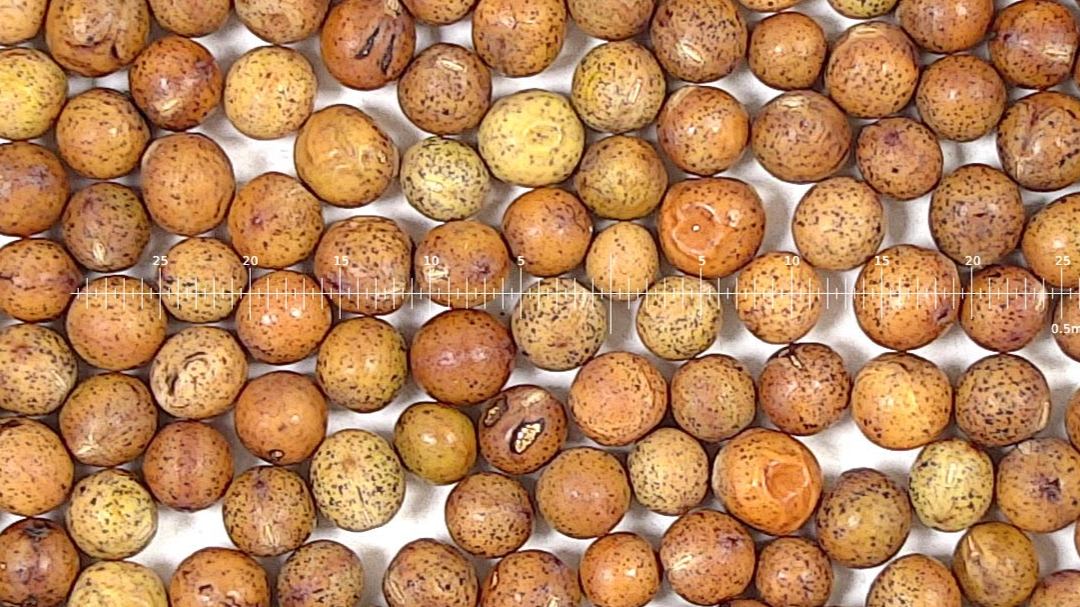
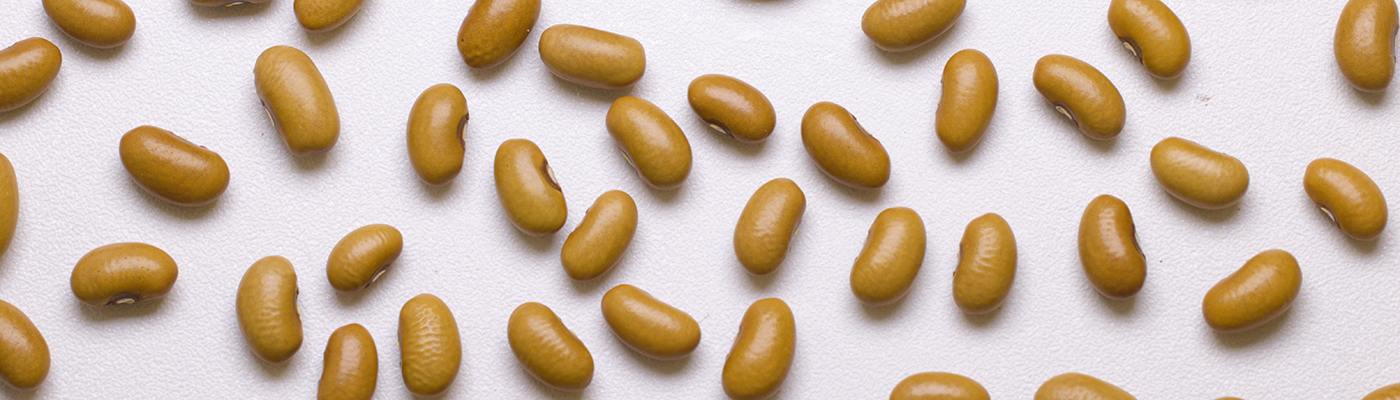
Top photo: The seed sample NGB 18054, Gulböna från Östergarn, originates from Gotland, Sweden.
The impact of climate change is becoming increasingly clear for every year. As a result, the demand for plant-based protein food is on the rise, not least domestically produced.
The Nordic countries have a long cultivation tradition of grain legumes such as fava beans and peas. Given the increased interest, the future of Nordic cultivation of grain legumes should be bright. An enlarged domestic production would also contribute to a positive direction when it comes to Nordic food security being a climate-smart alternative to imported soybeans. In addition, grain legumes such as peas have the capacity of nitrogen fixation in the fields, a property with many benefits.
NordGen's collection includes fava beans, common beans, soybeans, lentils and more than 2.000 accessions of peas – an asset that can be of importance for the future Nordic plant breeding. Below you can read more about some of our work with grain legumes.
Key Activities
Focus on protein crops
Given the increased interest, the future of Nordic cultivation of grain legumes should be bright.
As mentioned in the previous chapter Projects, the comprehensive project Next generation genebanking focusing on NordGen’s entire collection of protein crops such as peas, beans, lentils and clover, will be active during 2024 to 2026. Another example is TastyBeans. Below are some additional examples of collaborative projects on protein crops that were active during 2025.
Nordic bean collection characterized
Another European project that NordGen is part of is called ExploDiv and is organized through The European Cooperative Programme for Plant Genetic Resources (ECPGR). Institutions from twelve European countries are partners in the project which, among other things, aims to identify and secure genetic resources within grain legumes to sustain adaptive capacity for resilience to climate change. During 2023, 30 accessions from the Nordic bean collection were cultivated in NordGen's garden to gain more knowledge on morphological traits. In 2024 the next step was to multiply 12 selected accessions, these were evaluated at different geographical sites during 2025.
Give peas a chance
Legume storage proteins are often used for replacing animal proteins in plant-based alternatives, however, they usually show a weaker gelation capacity, which is an essential functionality in many food products. This challenge is compensated through energy-intensive steps such as fractionation and heating, and there is need for more sustainable alternatives.
This project will use the potential genetic variations that exist in the more than 2,400 pea accessions in the Nordic genebank to select pea seeds having an optimal protein composition of albumins, globulins and individual proteins (e.g. legumins and vicilins) suitable for adding optimal gelling functionality to plant-based foods and use natural variation instead of intensive processing to achieve the desired functionality.
The project is funded by Independent Research Fund Denmark and is active during 2022-2026. In 2025, researchers from the project announced in the scientific journal Food Chemistry that they have identified 51 old pea varieties from NordGen's collection that may be promising for use in future plant-based food production.
Near infrared analyzes of peas
In a collaboration between NordGen, Swedish University of Agricultural Sciences (SLU) and Foss analytics, a significant part of the Nordic pea collection was analyzed in 2023 using Near infrared (NIR) technology. This effort leds to more information about the pea collection, not least when it comes to the seed samples content of fat, protein, water as well as standard color. The cooperation continued and today the entire pea collection has been analyzed.
European evaluation of grain legumes
NordGen is an active partner in the ECPGR project EVA legumes which began its operations in 2024. It is a European network activity focusing on evaluation of different grain legumes in diverse environments throughout Europe. The crops included beans, chickpea, fava bean, lentil, lupine, pea and orphan legumes. NordGen will be involved in field trials on lentil, lupine and beans taking place in 2025 and 2026.
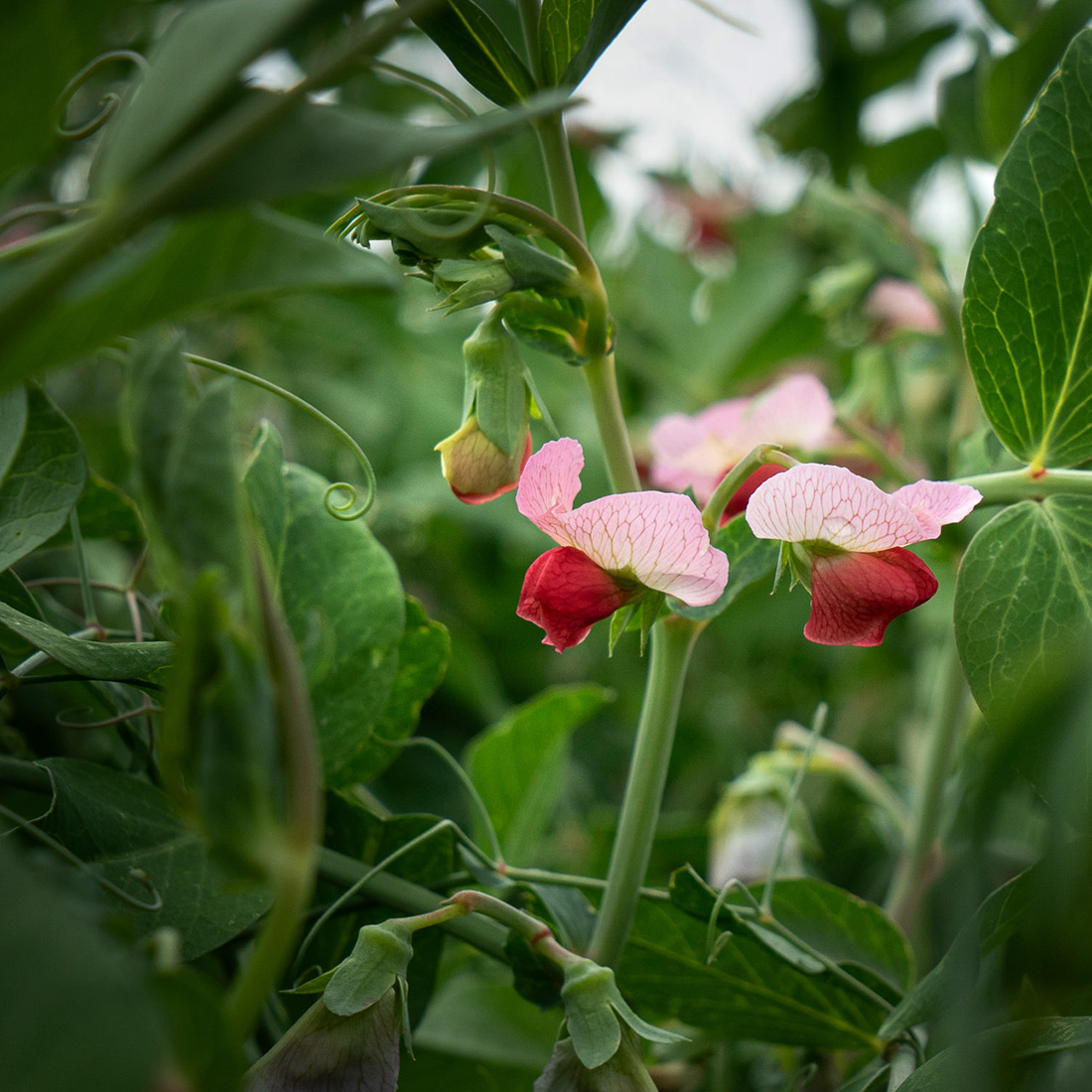
The pea NGB 101520, Stipula imminuata, was included in a big pea donation from the Swedish Weibullsholm Plant Breeding Institute